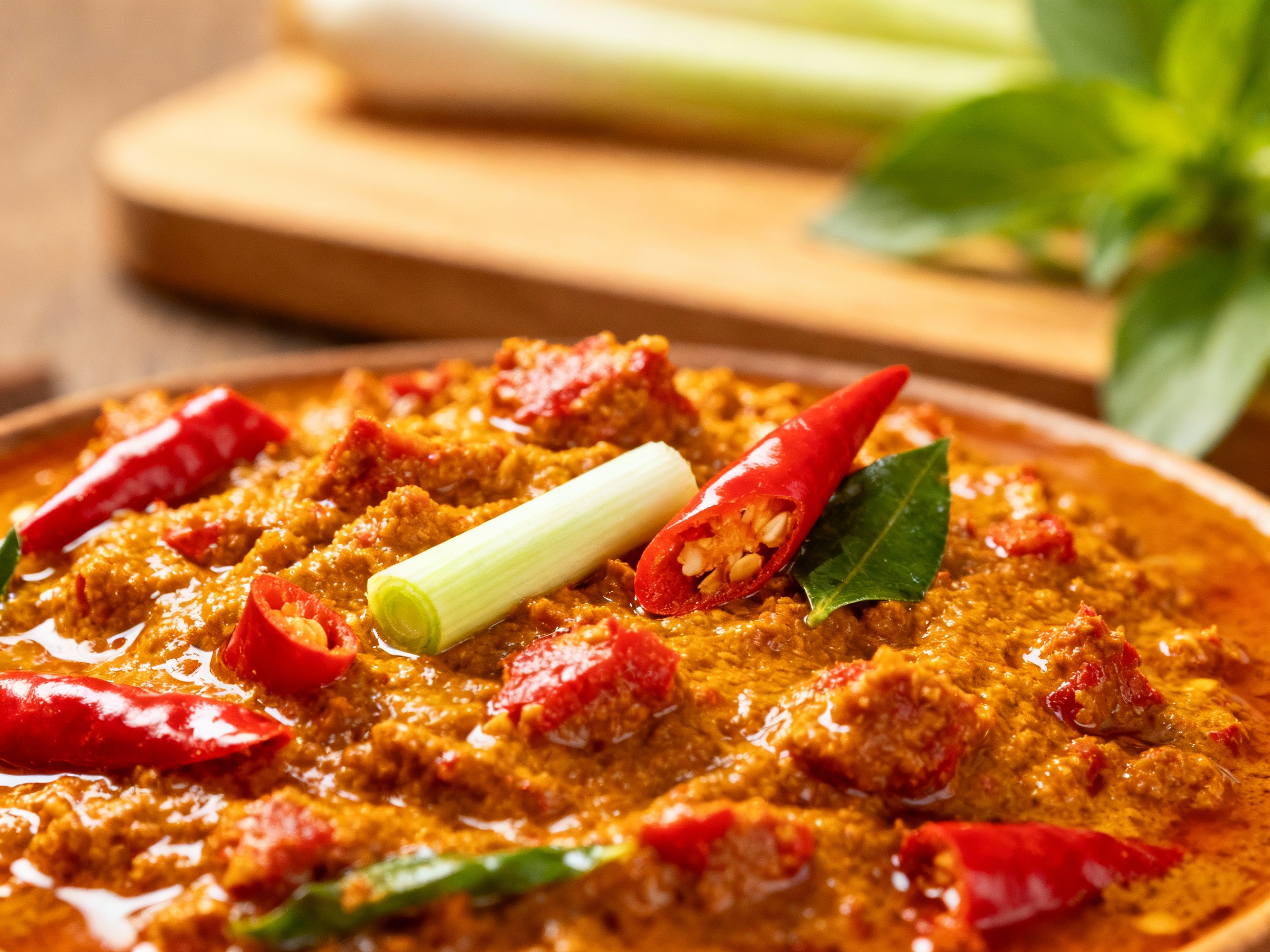
Thai red curry paste, or nam prik gaeng phet, is the foundation of countless Thai dishes. This vibrant, fiery paste combines aromatics, spices, and chilies into a concentrated flavor bomb that transforms simple ingredients into complex, restaurant-worthy meals.
Understanding Thai Curry Pastes
Thai cuisine features several curry pastes, distinguished by their chili types and ingredient ratios. Red curry paste gets its color and moderate heat from dried red chilies. It's more intense than yellow curry but milder than green, making it the most versatile and popular choice. The paste serves as a flavor foundation, meant to be fried in oil or coconut cream before other ingredients are added—a crucial technique called "cracking" the paste.
The complexity of Thai curry paste comes from the interplay of multiple elements: the heat from chilies, the pungency from garlic and shallots, the citrus notes from lemongrass and kaffir lime, the earthiness from cumin and coriander, and the umami depth from shrimp paste. Each ingredient is essential, and shortcuts result in inferior flavor.
Traditional Ingredients and Techniques
Authentic red curry paste begins with dried red chilies, soaked until soft. These are pounded with other ingredients in a granite mortar and pestle—the traditional tool that crushes and bruises ingredients rather than cutting them, releasing maximum flavor. The order matters: start with the hardest ingredients (galangal, lemongrass), add the softer aromatics (garlic, shallots), then incorporate the spices and shrimp paste.
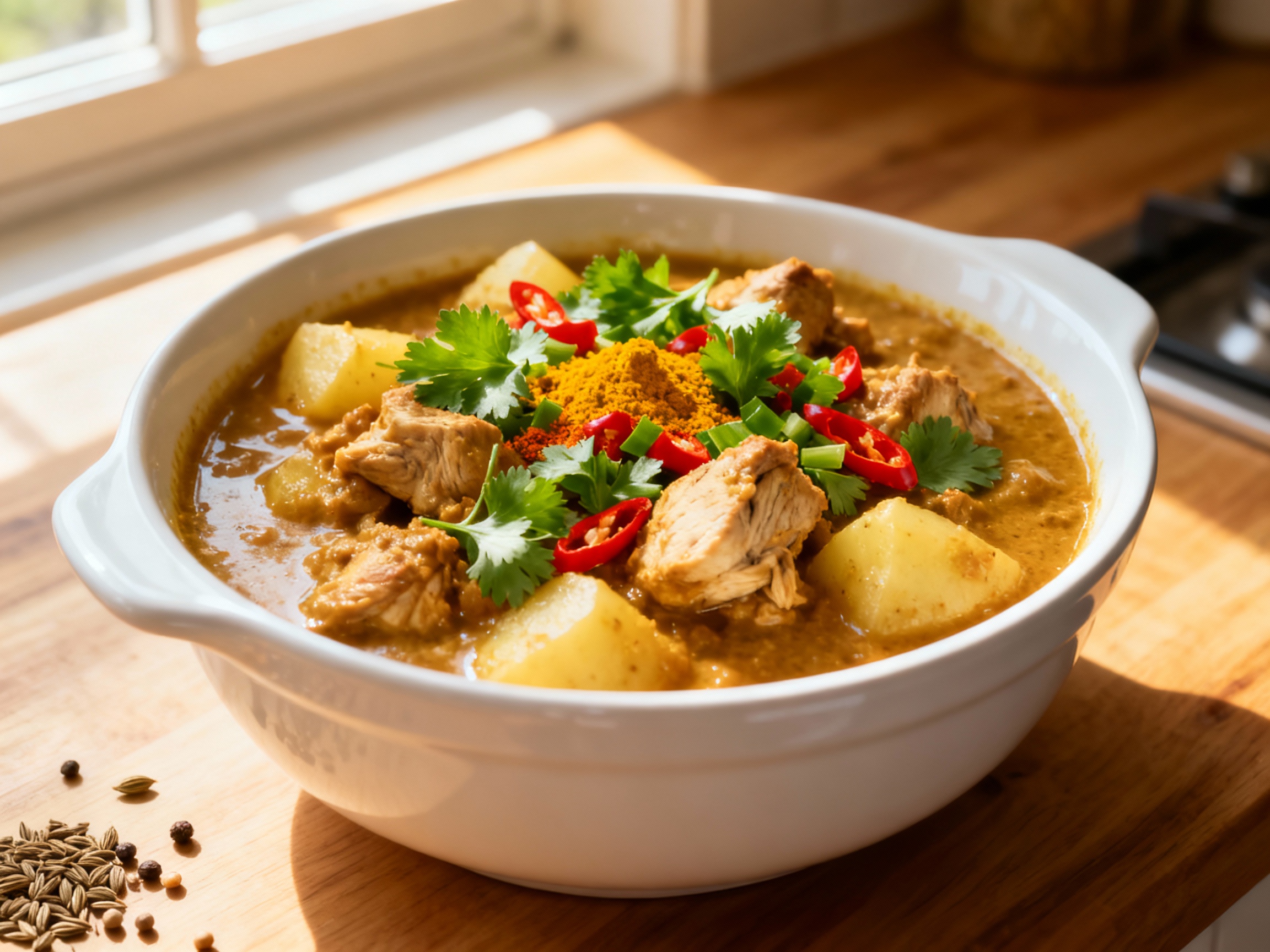
The pounding process is meditative and takes time— typically 20-30 minutes of steady work. Modern blenders can replicate the texture but not quite the flavor nuance achieved through traditional pounding. If using a blender, add minimal liquid and process in short bursts to prevent overheating, which can dull the aromatics.
Using Red Curry Paste
The magic happens when you fry the paste in oil or coconut cream over medium-high heat. You'll know it's ready when the oil separates and the paste darkens slightly, releasing an intoxicating aroma that fills your kitchen. This step, taking just 2-3 minutes, transforms the raw paste into something aromatic and complex.
From there, add coconut milk and your protein or vegetables. The paste is concentrated—start with 2-3 tablespoons per can of coconut milk and adjust to taste. Balance the heat with palm sugar, the saltiness with fish sauce, and the richness with fresh lime juice. Thai cooking is all about balance between sweet, salty, sour, and spicy.
Storage and Shortcuts
Homemade curry paste keeps refrigerated for a month or frozen for six months. Make large batches and portion into ice cube trays for convenient single-serving portions. While homemade paste is incomparable, quality store-bought versions exist for those short on time. Look for Thai brands with natural ingredients—avoid those with artificial colors or excessive oil. A jar in your fridge means quick, flavorful meals are always within reach.
Ingredients
- Main ingredient
- 2 tbsp spices
- 1 onion
- 3 cloves garlic
- 2 cups vegetables
- Oil and salt
Instructions
- Prepare ingredients
- Heat oil
- Sauté aromatics
- Add spices
- Cook until done