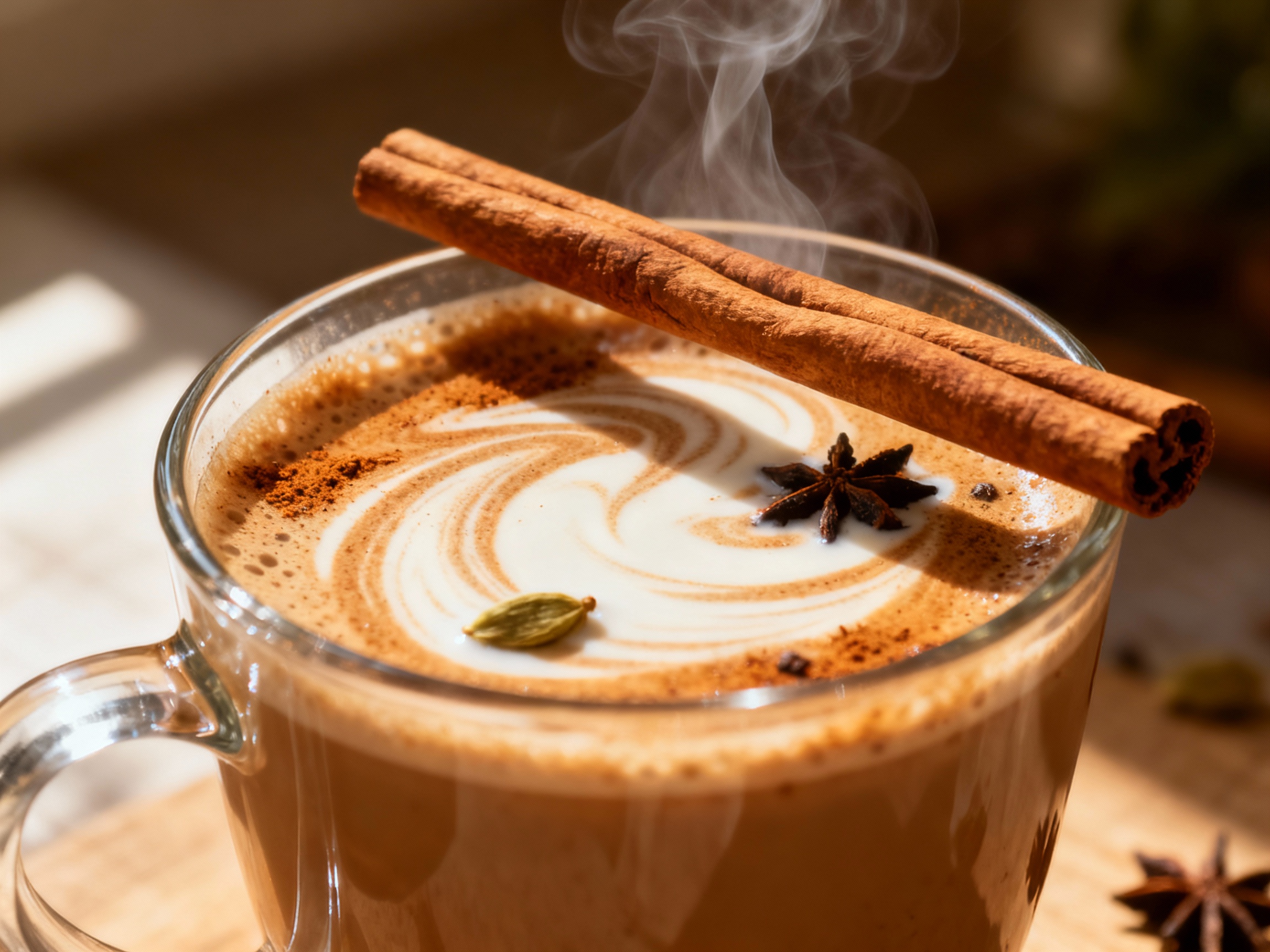
Masala chai is more than a beverage—it's a ritual, a comfort, and a cultural cornerstone of the Indian subcontinent. This aromatic spiced tea combines strong black tea with warming spices, milk, and sweetener into a drink that energizes and soothes simultaneously.
The Essential Components
Authentic masala chai starts with strong black tea—typically Assam or a robust blend that can stand up to milk and spices. The tea must be strong enough to shine through the other ingredients without becoming astringent. Loose-leaf tea is preferred, though quality tea bags work in a pinch.
The "masala" (spice blend) varies by region and household, but classic ingredients include cardamom, cinnamon, ginger, black peppercorns, and cloves. Cardamom is non-negotiable—its sweet, floral notes define chai. Fresh ginger adds heat and zing, while cinnamon provides warmth. Black pepper and cloves contribute subtle spice that develops in the background.
The Cooking Method
Proper chai isn't made by adding spices to brewed tea—everything simmers together, allowing flavors to extract and meld. Start by crushing whole spices to release their oils. Simmer them in water with fresh ginger for several minutes, then add tea leaves and boil briefly. The mixture should bubble vigorously, which is essential for proper flavor extraction.
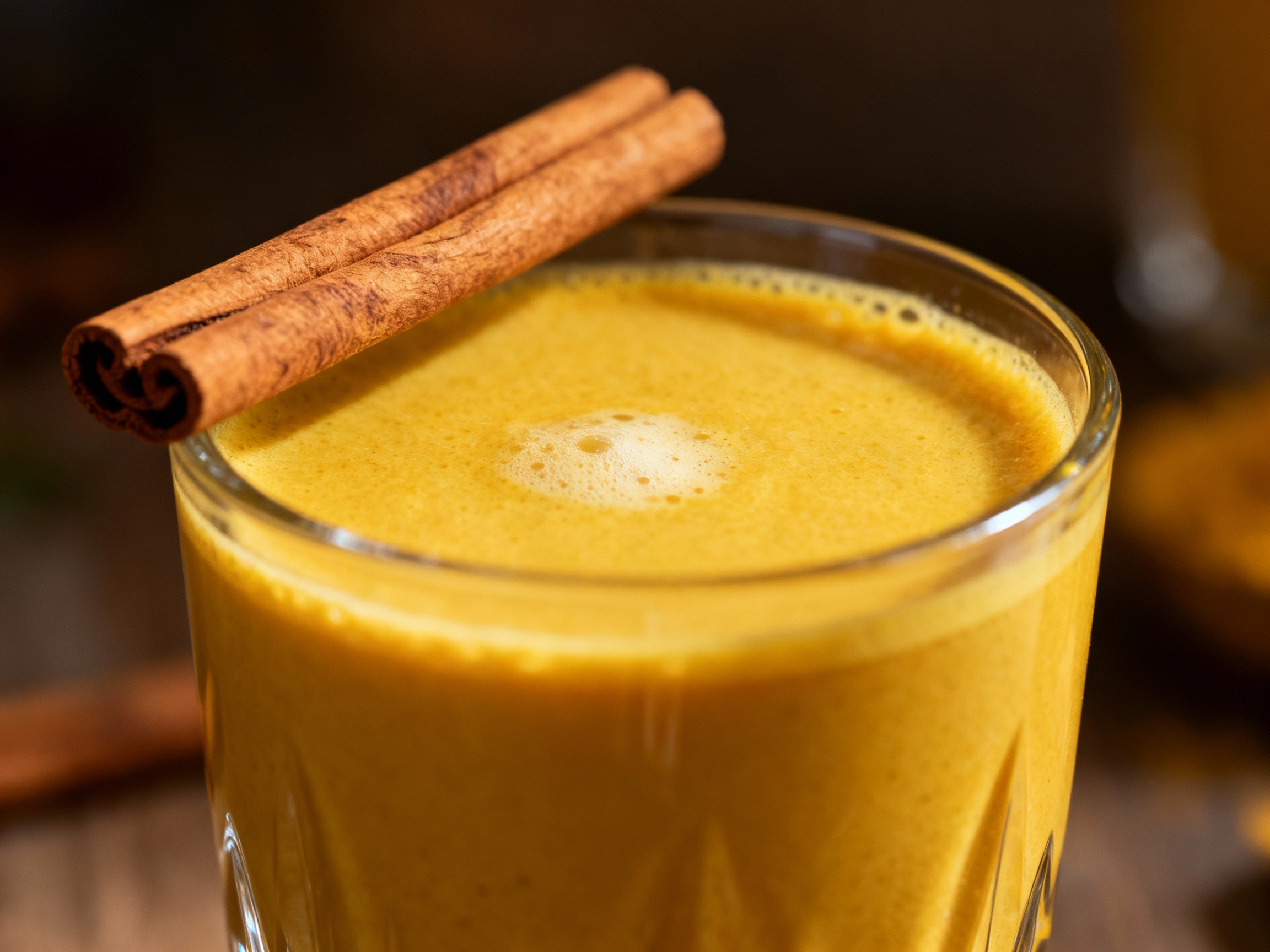
Add milk and return to a boil—chai should "rise" dramatically, creating a frothy top. This requires attention, as it can boil over quickly. Some cooks let it rise and fall three times for optimal flavor and texture. Finally, add sugar or sweetener to taste, strain, and serve immediately in small glasses or cups.
Customization and Variations
Regional variations abound. Kashmiri chai uses green tea and includes saffron and almonds. Adrak chai emphasizes ginger for extra heat. Some versions include fennel seeds or star anise for anise notes. The milk-to-water ratio is personal preference—more milk creates a richer, creamier chai, while less keeps it lighter and emphasizes the tea.
Sweetness level varies dramatically. Street vendors in India often make chai quite sweet, while home cooks might prefer it barely sweetened. Jaggery (unrefined cane sugar) adds molasses notes, while honey provides floral sweetness. Some prefer it unsweetened, allowing the natural warmth of spices and tea to shine.
The Cultural Significance
In India, chai is woven into daily life. It's served to guests as a gesture of hospitality, sipped during afternoon breaks, and bought from street vendors in small clay cups called kulhads. The ritual of making and sharing chai fosters connection and conversation. It's less about caffeine and more about the pause it creates in a busy day.
Making chai at home connects you to this tradition. Take time with the process—the simmering, the watching, the straining. The act of preparation is as important as the drinking. Serve it hot, ideally with simple cookies or biscuits, and experience why this humble spiced tea has captured hearts for generations. Once you master homemade chai, commercial versions will never satisfy again.
Ingredients
- Main ingredient
- 2 tbsp spices
- 1 onion
- 3 cloves garlic
- 2 cups vegetables
- Oil and salt
Instructions
- Prepare ingredients
- Heat oil
- Sauté aromatics
- Add spices
- Cook until done